

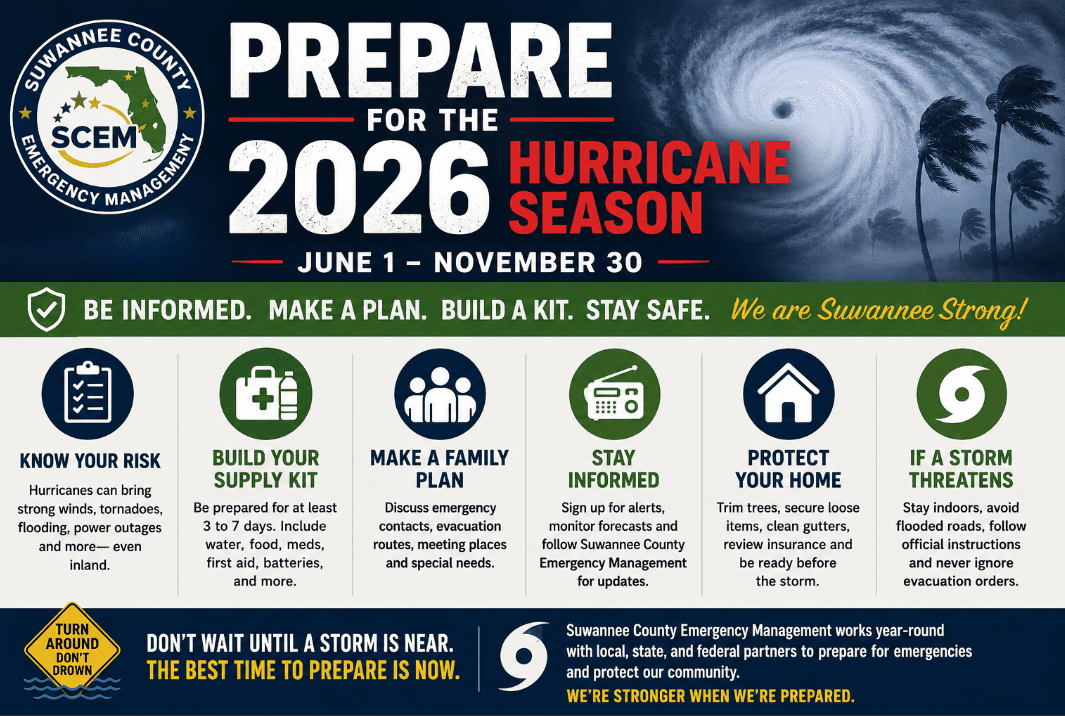
Preparing for the 2026 Hurricane Season
Be Ready Before the Storm
The 2026 Atlantic Hurricane Season officially runs from June 1 through November 30. While forecasters are predicting a below-average season, emergency management officials continue to emphasize that it only takes one storm to significantly impact our community. Residents of Suwannee County should use this time to prepare their homes, families, businesses, and emergency plans before a storm threatens our area.
Know Your Risk
Although Suwannee County is inland, hurricanes and tropical storms can still bring:
- Damaging winds
- Tornadoes
- Flooding from heavy rainfall
- Extended power outages
- Downed trees and debris
- Road closures and travel disruptions
Every resident should understand their risk and have a plan in place before hurricane season begins.
Build Your Emergency Supply Kit
Prepare enough supplies to sustain your household for at least three to seven days following a storm. Your emergency kit should include:
- One gallon of water per person per day
- Non-perishable food
- Prescription medications
- First aid supplies
- Flashlights and extra batteries
- Portable phone chargers
- Important documents stored in waterproof containers
- Pet food and supplies
- Battery-powered weather radio
- Cash and emergency contact information
Emergency officials recommend assembling supplies well before a storm develops to avoid shortages and crowded stores.
Create a Family Emergency Plan
Every household should discuss:
- Emergency contact information
- Evacuation routes
- Meeting locations if separated
- Special medical needs
- Transportation arrangements
- Pet evacuation plans
Make sure all family members know where to go and what to do if severe weather threatens our area.
Stay Informed
Reliable information can save lives. Residents are encouraged to:
- Sign up for local emergency alerts and notifications
- Monitor official forecasts from the National Hurricane Center
- Follow guidance from Suwannee County Emergency Management
- Keep a battery-powered weather radio available
- Monitor local media outlets during severe weather events
Receiving timely information allows residents to act quickly when watches, warnings, or evacuation notices are issued.
Protect Your Home
Take time now to prepare your property by:
- Trimming trees and removing dead branches
- Securing outdoor furniture and loose items
- Cleaning gutters and drainage systems
- Testing generators and backup power equipment
- Reviewing insurance policies and coverage
- Photographing property and valuables for insurance documentation
These simple steps can reduce damage and speed recovery after a storm.
During a Storm
If a hurricane or tropical storm threatens Suwannee County:
- Stay indoors and away from windows
- Avoid driving through flooded roadways
- Keep emergency supplies readily accessible
- Follow instructions from local officials
- Never ignore evacuation orders when issued
Remember: Turn Around, Don’t Drown. Floodwaters can be deeper and more dangerous than they appear.
We’re Stronger When We’re Prepared
Suwannee County Emergency Management works year-round with local, state, and federal partners to prepare for emergencies and protect our community. Preparedness starts with each resident taking action before a storm forms.
Don’t wait for a hurricane watch to begin preparing. The best time to get ready is now.
For updates, preparedness resources, and emergency information, follow Suwannee County Emergency Management throughout the 2026 Hurricane Season.